Friday, January 31, 2014

Immy Humes and her father "Doc Humes"

As August comes to an a close, everyone seems in a last minute panic to celebrate summer.  Amanda asks me to come to a mid-week celebration of cantaloupe.  A retired psychotherapist, Amanda plays daily tennis at the local club and keeps a large flock of chickens she calls “the girls.”  Her melons are big, juicy and still warm from the sun.  Four of us sit at her kitchen table to feast and gab.  A discussion of world politics mixes with sticky orange-colored juice run down chins. 
Immy, a film maker, has just completed a film about her father, the author H.L. Humes.  Annalou, her mother and a retired bank executive, spends summers in Stonington and plays host to five daughters and their families at a rambling white house surrounded by tall shade trees, lawn, and well-tended gardens.  We assess the growing season as a woodpecker swops in for seed for the patio feeder.

Terrible year for tomatoes,” Annalou complains.  “Haven’t had a good one.”

“But these melons have loved it.”  Amanda says.

“We’re due for more rain,” I add.  “Ernesto passes off the coast this weekend.  Solemn nods accompany this piece of news.  It’s hurricane season. We all know the heat and humidity will continue.  Storm clouds will gather.  Sheets of lightening may brighten the sky.  Down spouts will be overwhelmed with tropical rain. But if the storm remains offshore, we will be spared the full threat of a hurricane.  

Wednesday, January 29, 2014

Anguilla Brook Farm and Gardens


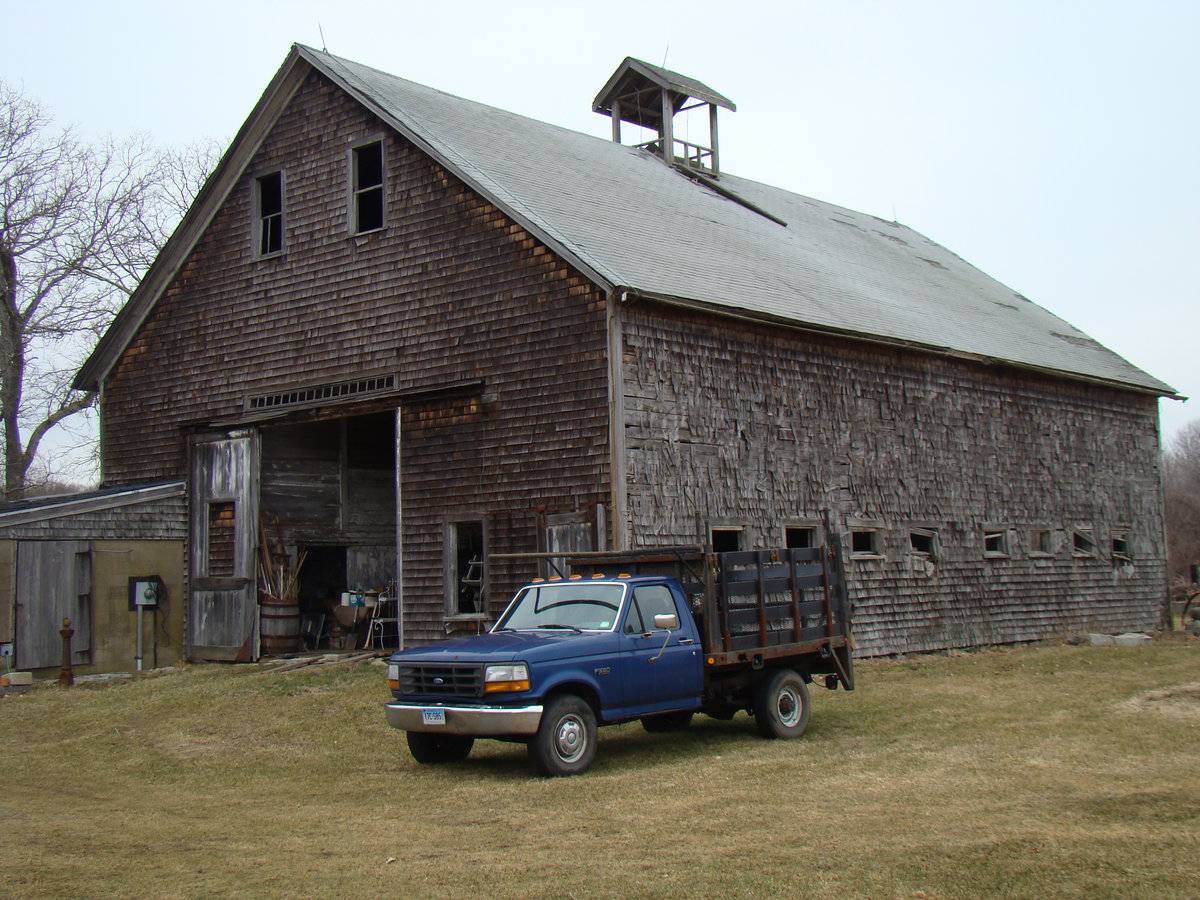
By the end of the day, storm clouds gather. Water from the recent storm brings Anguilla Brook high on its banks rushing past three silos and a large barn built in 1904.  The York Farm was a working dairy until recent memory.  The property, like the Davis Farm, is a remnant of a very early Stonington land grant.  Locals stopped to buy milk on Wednesday and Sundays.  But when Interstate 95 was built in the 1950s, the highway divided the original acreage and put a large section of it to public use.  Sibby Lynch and Michael Schefers now farm 2.78 acres of the original York Farm situated beside the stream.  The call their place Anguilla Brook Farm and Gardens. 

Sibby Lynch purchased the property in 1978.  Here she and Michael grow local versions of Italian and French vegetables such as fennel and cardoon, rarely found in American markets.

“I worked in New York City, but I visited here on weekends and planted flowers and potatoes.  I remember taking the train back to New York on Sunday nights with a pocketful of tiny potatoes and feeling so lucky to have a connection to this beautiful field,”  Sibby tells me. 

By the time the Farmers Market started in Stonington in 1998, Sibby had moved back to town.

“I signed up for the market but didn’t have anything planted!” she remembers.  The morning of the first market, I decided I would try selling watercress from the brook.”

Watercress is not a New England native plant.  Early colonial settlers brought the English speciality with them.  With few local predators, watercress quickly overran small brooks and streams in the northeast.  The Connecticut Department of Agriculture considers the plant an invasive species.  State rules ban the introduction of watercress into new watercourses but existing cress can be harvested where it grown for personal use or public sale.

The original garden follows a strict geometry.  Wide gravel pathways separate square and oblong beds where a mix of herbs, flowers, vegetables and espaliered fruit trees grow. A long picnic table and benches welcome visitors to pause and observe.  Birds nest at eye level in the dwarf trees. Unfortunately, a rabbit has breached the fence that surrounds the garden and has established two large burrows. 

Michael created a second garden that mirrors the lines of the first. Here the couple grows European heirloom vegetables carefully researching seeds available from specialized catalogues.  Part of the new garden is devoted to local Indian flint corn which the couple grind for polenta.  

Monday, January 27, 2014

Buff the Cat moves with the sun


Buff the Cat moves to new parts of the garden to catch sun rays. It’s mid-August, with fall fast approaching. She crawls through a rose bush, then gingerly turns around avoiding the thorn-encrusted canes to settle for a nap, her head resting of the wood edging a pathway.

The air is delicious.  High clouds string out like linen towels on a drying line.  A light breeze riffles the slender leaves of liriope.  Spent stalks of liatris resist the wind, tall sentries at the end of another season of bloom.  Marjoram cascades down the bank on either side of brick steps.  Bees bounce from flower to flower as they gather late nectar and pollen.  Strong straight rays of sun burrow into the stone patio under the wild cherry tree.  Shadows cast by the pergola are sharp-edged, non-nonsense expression of late summer shade geometry.  Up the hill, layers of green ground cover, weeds, trees -- all mingle in endless overlaps of foliage.  The morning temperature, at 65, hints at cooler weather to come.

A robin fledgling rolls and scratches on the flat roof of the woodshed then files into a blueberry bush where a flutter of leaves reveals his continuing discomfort.  Then, he’s off to the birdbath where he pecks at his new feathers, then squats in the water as if it might provide some relief

Friday, January 24, 2014

Aiki Farm

To complete the ingredients list for your Chez Panisse golden moment, shop for mixed greens at Aiki Farm’s market tent.  Bob Burns engages in a constant patter with his customers.  In his slow nasal New England drawl, he encourages newcomers to try pea shoots or a small cup of wheat grass juice.  Bob, a slim intense man, begins his day at 5:30am with a 45-minute seated meditation.  A former lead instructor of aikido at the United States Marine Corps Depot in San Diego, Bob returned to his native Connecticut to combine the practices of martial arts and farming. 


Each summer, college-aged apprentices come to live and study at Aiki Farm.  The program is farm-based but adds the study of martial arts in a studio called a dojo.  Each day’s schedule combines meditation, aikido practice, field work and lessons in bio-intensive farming techniques.  Students also join Bob at Farmers Markets. 

Bob’s speciality is Aiki Salad Mix, a combination of 27 varieties of field grow lettuces that include zesty additions of Asian and Italian greens.  He sells the mix at Farmers Markets and to local restaurants.  

Bob’s shoots are also popular.  He corrects me sternly when I call them “sprouts.” Shoots of peas, sunflower, popcorn, as well a buckwheat are on offer.  The last is commonly known as wheat grass.  When pressed, the young shoots expel a bright green juice.  Down it neat, like a slug of iced vodka. While Aiki Farms greens are field-gown, shoots need a carefully controlled indoor environment to bring seeds to harvest-size in a little over a week.  

Wednesday, January 22, 2014

Beltane Farm


Paul Truby, center
Success stories such as Laura Chenel Chevre and Earthbound Farms lettuces encourage other artisans to enter local niche food markets.  Stonington Farmers Market has two such candidates.  For excellent local goat cheese, look to Paul Truby of Beltane Farm; for local lettuce mix, find Robert Burns of Aiki Farm.  Buy their products and duplicate a culinary moment of history: the legendary Chez Panisse salad course. 

Beltane Farm hosts visitors only before or after its busy summer market season.  I drop in on a Sunday afternoon for a fall tasting event.  In the hills of Lebanon, only a mile off the main highway to Hartford, I am sure my GPS has betrayed me.  To prevent such treachery, I always bring written directions.  The detailed explanation runs a full paragraph and includes the following references: “past the cow field, follow the road into the woods and continue almost a mile ...”  I feel completely lost, then round a curve and come upon a line of cars parked on the shoulder of this very narrow rural road.  Across the street is the entrance to Beltane Farm where Paul raises Oberhasli, Swiss dairy goats, and produces both fresh and ripened cheese from their milk. 

A white colonial house and large old barn announce that the farm has been around for a while.  Across the house yard stands a small shed heated by a potbelly woodstove.  The warmth is welcome on this crisp October day.  During the summer, Paul and his staff sell 90 percent of the farm’s output direct to customers at local Farmers Markets.  But today, Paul and his market staff are back on the farm to give tours through leaf-strewn pastures, small paddocks, and immaculate dairy facilities.  After a brief exploration, guests bring both increased knowledge and whetted appetite to cheese tasting.  

Beltane Farm is home to numerous goats and an assortment of other animals, including Nestor, the donkey.  Paul and his staff milk the goats twice a day, then pasteurizes the milk at 145 degrees for half-hour.  After rapid cooling, a vegetable enzyme is added to curdle the milk.  The resulting curds, hug in cheesecloth bags, become dry as liquid, called whey, drains away.  The curds are then salted in a large pot and formed into logs.  Dried herbs, black pepper, or shopped scallions decorate and flavor the small silky white logs.  

You can find Beltane Farm chevre in twelve Farmers Markets, 30 retail stores in New England, New York and New Jersey and on line through the Artisan Made in New England website.  Along with the traditional fresh chevre, Beltane Farm produces two different aged goat cheeses and a Greek style goat cheese yogurt. 

Monday, January 20, 2014

New salad launches two industries

Returning to complete her degree in Berkeley, Alice Waters continued to dream of establishing a place to eat where fresh and local American products could be used to express French cuisine.  By ferreting out the sparse number of existing local growers in the Bay Area and encouraging others to join her network of fresh food providers, Alice gradually established sources she could trust.


Ten years after opening Chez Panisse, Alice discovered Laura Chenel’s operation in Santa Rosa and put in a standing order of fifty pounds of goat cheese a week.  Chez Panisse baked these pungent rounds, then served them on a bed of baby greens.  This remarkable salad course led not only to a new understanding of the relationship between quality, local production, and taste.  It also launched two industries: American-produced French-style goat cheese and mixed baby greens now commonly called spring mix. 

In 2006, Laura Chenel sold over two million pounds of her goat cheese.  Meanwhile, Earthbound Farm, based in the Salinas Valley, has ridden the spring mix market to ever-higher levels of sales.  Begun in the early 1980s by two transplanted New Yorkers, Drew and Myra Goodman, Earthbound Farms invented an industry: triple washed and bagged salad mixes.  The operation began on 2.5 acres, rented land near Carmel California.  

In 2013, Earthbound Farms grew lettuces and other vegetables on 53,000 acres of certified organic farmland.  With annual sales of $460 million, Earthbound remains the largest grower of organic produce in the United States.  Sixty-five percent of sales come from packaged salad greens. 

Friday, January 17, 2014

Chèvre Comes to America

Slow Food not only supports the recognition of distinct regional foods and heritage breeds.  It also recognizes the importance of local food processing techniques.  Until the late 1970s, the production of goat cheese was limited to Europe, with France the acknowledged star.  The United States had no commercial operations to produce goat cheese, now a wildly popular artisanal product.

If Slow Food ever publishes a list of people important to expanding the types of food processing practiced in the United States, Laura Chenel must appear on the list.  It was her single-minded effort to study French-style goat cheese production and replicate it in California that brought chèvre to America.  After participating in a series of cheese apprenticeships in France, Laura returned to Sonoma County with a viable recipe to make a bright, white, tangy cheese that quietly announced itself as made from goat milk.

Laura began production of her signature chèvre in the late 1970s.  I met her shortly thereafter.  As I remember, her cheese production at the time was housed in a cinder block building on the outskirts of Santa Rosa.  Inside, the building was cool, the light dim.  The interior climate contrasted sharply to the day’s summer temperature.  Wooden racks with slatted shelves held the current batch of carefully placed pillows of cheese dusted with a coating of gray ash. 

Across the Bay, another important taste-maker was building her business.  Alice Waters opened her now famous restaurant, Chez Panisse, in Berkeley in 1971.  The restaurant was inspired by a tip to France during college.  Originally conceived as a semester to study French literature, the trip turned into an extended excursion that became a serious study of French food: where it came from, how it was cooked, how it was presented.  Alice haunted Paris’ open-air markets, cooked her way through Elizabeth David’s French Provincial Cooking, visited southern France where sumptuous flavors spilled from hillside fields into local markets: fresh picked herbs, garden grown vegetables, olive oil, garlic.