Friday, February 14, 2014

More local food

Barbara and Al arrive late to my Sunday picnic.  Barbara brings a tray of deviled eggs and the first of many food adventure stories.

“I arrived at the Market behind schedule yesterday,” she tells us breathlessly.  “Whit Davis had already sold out of eggs.  So had Don Henry.  But he referred me to Studio Farm.”  Barbara shows off her twelve perfectly grown and perfectly prepared eggs.  Golden yolks, mixed with mayonnaise and market herbs overfill each cavity and spill onto perky whiles.  With a sense of triumph, she places the tray on the serving table. “I’ve succeeded in my local quest!”

The bocce games winds down and chairs around the picnic tables fill up.

Phil has stepped way beyond his “I-need-a-little-help-here” apprehension.  I greeted him at market on Saturday and asked about salad makings.

“Oh, everyone will bring salad stuff,” he replied. “I found something much more exciting.”

And so he did: a Dondero Orchard freshly baked fruit pie.  Before he adds his prize to the growing collection of local foods, he solemnly reads aloud the ingredient label for all to hear. 

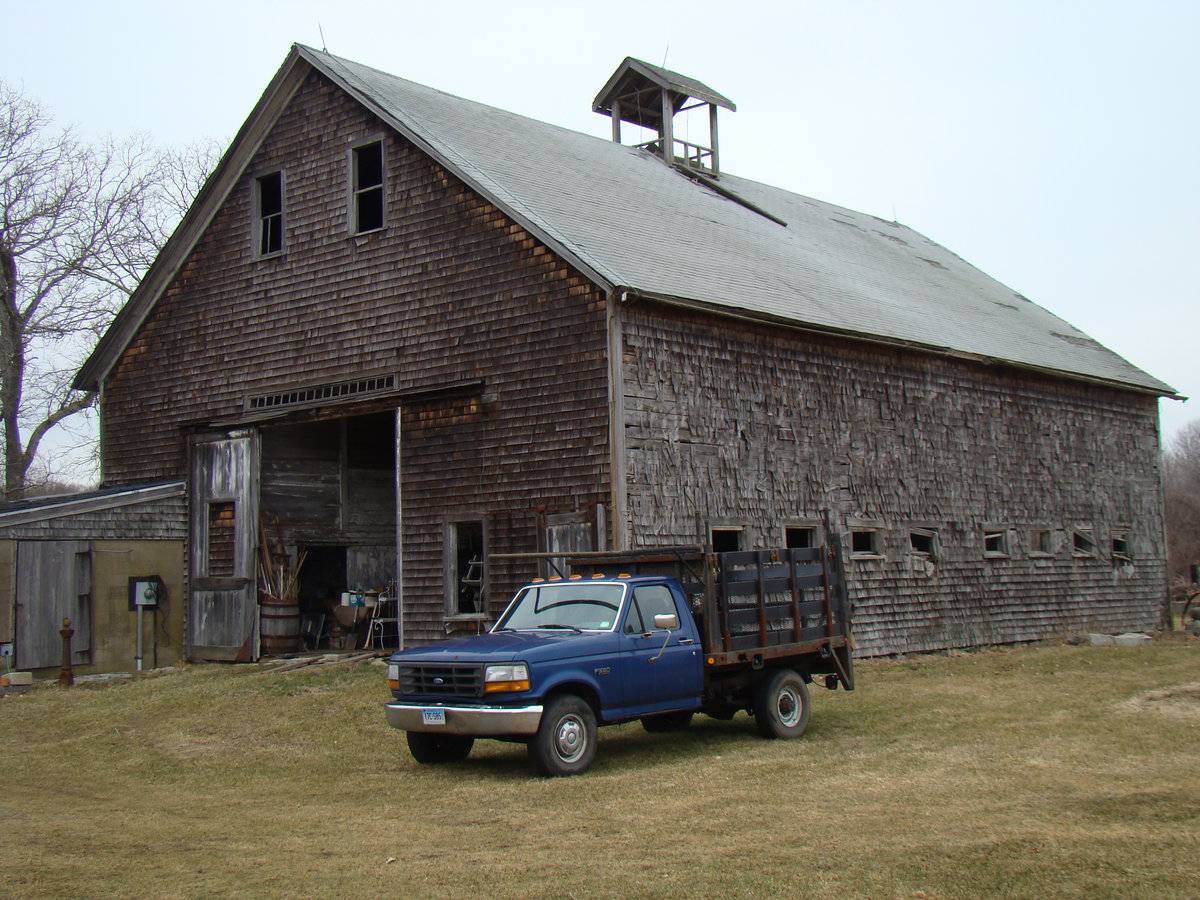
Everyone had taken the challenge of local food seriously but none as literally as Guy.  Guy and his family are my back-fence neighbors.  He and I also share an interest in gardening and a long-term friendship built on ten years of work together remodeling a barn and completing various landscape projects.  Most recently, we have created a joint food garden.  

As I set up two long picnic tables and a dozen folding chairs on the lawn by the annual beds, Guy strides down the garden path that connects our two properties.  He looks a bit sheepish and folds his arms across his chest before he asks my advice.

“I got a shell-fishing license the other day.  Went with a buddy this morning and dug some steamer clams. Shall I cook them up now?  Or wait till later?”

I laugh with delight and give him a high-five for ingenuity. 

Tuesday, February 11, 2014

Lawn bocce and local food


My own garden provides interesting food options for a Sunday picnic.  But to expand the collection, I ask each guest to bring a potluck dish prepared from a local food source.

I call Phil, a watercolor artist who lives in Stonington Borough, with an invitation.  There is a lengthy pause as he considers.

“Local food?  I’m going to need some help here.”  He sounds truly mystified.

“It will be easy,” I reassure him.  “Just come to the Farmers Market on Saturday and pick up a couple of head of lettuce.  We’ll make a salad when you arrive.”

Lawn bocce is the first order of a picnic afternoon.  Since many of my ten or so guests have never met each other, the game serves as a pleasant icebreaker.  It also entertains children while they mix with the mostly adult company.  I have no fixed bocce area so the entire mowed area around the house serves as the court.

At an early season picnic, Ryan, who is twelve, arrives on crutches.  His right leg has eighteen stitches and is immobilized by heavy bandages. I assume he’ll observe play from the bocce bench, but no, he participates enthusiastically and becomes the mainstay of every game.

We start the first round up the hill by the terrace.  I hand out the rulebook, but no one can figure out how to score.

“Scoring seems to be lost in a bad translation from the Italian,”  Phil quips.

With that, the guests toss the book aside and make their own rules.  In some areas of the yard, the view of the bright yellow palino is obscured in a clump of grass.  In another location, the tiny sphere bounces off exposed ledge rock and rolls unpredictably for several feet.  Under the canopy of a large conifer, the surface is softer and holds fewer surprises.  The growth of moss slows the small ball when a team member pitches it forward to start another round. 

Friday, February 7, 2014

Garden picnics


Elisa, my garden apprentice arrives on Thursday for our usual two hours of joint farm work.  The sweet smell of new mowed grass hangs in the morning air.  Instead of the customary schedule, I divert our morning’s work from food garden to flower beds.  I’ve invited twelve guests for a picnic on Sunday afternoon.  I want the place to look its best.  I’ve challenged each guest to bring a dish that’s produced locally.  I want to hear their opinions about the food and the farmers from whom they purchased.

At a recent international conference on food held in Italy, speakers discussed consumers’ main concerns about food supplies.  A report summarized their findings: consumers want authenticity, trust and knowledge in their farmers.  Scientists, of course, would prefer that we take a more analytical view of our food.  But everyday eaters want to rely on the basics: taste and relationships.  They prefer to trust sensory qualities relayed to their taste buds and a working relationship with their farmers. Hopefully, this combination will lead to superior food and nutrition. 


To lure friends and neighbors to the pleasure of good locally grown food, I hold several picnics each summer.  I remind myself of a flower enticing freindly bees to my colorful abode with the offer of sweet nectar.  Humans have lots of ways of bonding.  At my picnics I combine two favorites -- food and playful physical activity.  A set of bocce balls sits near the picnic table in their red canvas bag; local meat and fish is ready for the grill. 


Wednesday, February 5, 2014

Stonyledge Farm

Leaving Studio Farm, Dot Wingate warns me that her daughter’s farm is a bit remote. After a twenty minute weaving back and forth over the Rhode-Island/Connecticut border, I arrive at Stonyledge Farm.  Belinda Learned greets me at the end of a dirt drive with a candid apology for all the weeds and detailed instructions on parking to avoid several large rocks.  

Stonyledge, 105 acres of field and woodland, spans the Connecticut/Rhode Island state line.  We begin our tour at a huge open field where chickens forage for seeds and insects.  At the edge of the meadow stand their laying boxes and night enclosures.  After admiring the poultry, we head toward a small heard of beef cattle.  The group also includes an older milk cow who acts as leader.  The animals merge at a large empty water trough.

“I came home from work this afternoon to find water spraying from a broken pipe. The supply line is shut while my husband, Ed, repairs the system.”  She shakes her head at this latest small farm inconvenience.

We wander back to an old farmhouse.  A new house sits farther up the hill.

“I hope it’s ready for winter,” Belinda says, ticking off what needs to be finished.  “Plumbing, electric, insulation.  This old place is leaky and impossible to heat.”

Belinda and I settle at a wooden picnic table.  Ed wipes his hands and declares the water problem solved.  Marcia, Belinda’s daughter, fills a tub with water for some visiting ducks.  We watch as they line up for a plunge.  A drake, impatient for a second dip, cuts in before his turn.  Quacks and pecks order him back to his place.

“Class projects and school vacation orphans end up here for the summer,” Belinda explains.

Everyone else at the table hears the commotion before I do.  Roosters in the poultry yard scream an alert.  Chickens happily scratching for bugs a second before, go rigid, marble statues frozen in mid-peck.

“Must be a fox in the field.”  Ed rises, gets a rifle from the house, and heads toward the chicken pasture.  He soon returns to report one dead bird but no predator in sight.  Being a free-range chicken has its hazards, it seems.

We all relax.  The chickens return to scuffing their early evening food.  We return to our conversation.  Belinda sighs.

“When was the last time I just sat here and enjoyed all this?”

Tuesday, February 4, 2014

Studio Farm Products

My last farm visit in August takes me to Studio Farm just up the road in Voluntown.  Since retirement, Dot and Dick Wingate devote full time to their farm operation.  As customer demand increased, Dot and Dick combined forces with their daughter, Belinda Learned and her husband Ed. With the purchase of Stony Ledge Farm in l992 and Valley View farm in 2007, this farming family has added more acreage and another generation of helpers. 


In addition to vegetables, Belinda and Ed raise beef cattle, pigs and chickens -- both as meat birds and as egg producers. Together, the families work together under the name Studio Farm Products.

It is a constant juggle to balance the various aspects of the operation: two Farmers Markets a week, a large CSA (community supported agriculture) membership, gardens and animals care, and continuous conversion of berry and fruit harvests into small batches of jellies and jams. 

When I arrive at Studio Farm, Dot is washing freshly pulled onions under an outdoor spigot.  Her dish of the day is rhubarb chutney.  This sweet and sour mixture includes sugar, spices, vinegar, and onions along with rhubarb.  On the kitchen stove, two huge pots of chopped rhubarb await the addition of other ingredients. 

Dick slices onions.  Dot reads from a laminated recipe card, then carefully measures a cup of sugar.  Simultaneously, she fields my questions.  I lack confidence in my own ability to perform such multi-tasking!  Perhaps Dot’s unflappable concentration is the result of raising four children while carrying out the annual summer ritual of home canning.

“We’ve always been self-sufficient,” she says. "We were both teachers and didn’t have large salaries.  Having a garden and putting up food has always been our way of life.”

I ask what preserves they prepare.  

“We start with strawberries in the spring.  Then go on to blueberries and other fruit.  We offer a wide variety of jams and jellies ... from blueberry ginger to rhubarb marmalade.  Most come with a low sugar and no sugar options.” At market, Studio Farm Products displays jars of preserves in neat rows.  Prices are consistent.  All 4oz jars cost $3.00; all 8oz jars cost $6.00.”

Studio Farm Products has benefited from new food production regulations which were formalized by the State of Connecticut on January 1, 2011.  These regulations allow the production of “acidified foods with the pH value of 4.6 or less” to be produced on the “premises of residential farms.”  

Friday, January 31, 2014

Immy Humes and her father "Doc Humes"

As August comes to an a close, everyone seems in a last minute panic to celebrate summer.  Amanda asks me to come to a mid-week celebration of cantaloupe.  A retired psychotherapist, Amanda plays daily tennis at the local club and keeps a large flock of chickens she calls “the girls.”  Her melons are big, juicy and still warm from the sun.  Four of us sit at her kitchen table to feast and gab.  A discussion of world politics mixes with sticky orange-colored juice run down chins. 
Immy, a film maker, has just completed a film about her father, the author H.L. Humes.  Annalou, her mother and a retired bank executive, spends summers in Stonington and plays host to five daughters and their families at a rambling white house surrounded by tall shade trees, lawn, and well-tended gardens.  We assess the growing season as a woodpecker swops in for seed for the patio feeder.

Terrible year for tomatoes,” Annalou complains.  “Haven’t had a good one.”

“But these melons have loved it.”  Amanda says.

“We’re due for more rain,” I add.  “Ernesto passes off the coast this weekend.  Solemn nods accompany this piece of news.  It’s hurricane season. We all know the heat and humidity will continue.  Storm clouds will gather.  Sheets of lightening may brighten the sky.  Down spouts will be overwhelmed with tropical rain. But if the storm remains offshore, we will be spared the full threat of a hurricane.  

Wednesday, January 29, 2014

Anguilla Brook Farm and Gardens


By the end of the day, storm clouds gather. Water from the recent storm brings Anguilla Brook high on its banks rushing past three silos and a large barn built in 1904.  The York Farm was a working dairy until recent memory.  The property, like the Davis Farm, is a remnant of a very early Stonington land grant.  Locals stopped to buy milk on Wednesday and Sundays.  But when Interstate 95 was built in the 1950s, the highway divided the original acreage and put a large section of it to public use.  Sibby Lynch and Michael Schefers now farm 2.78 acres of the original York Farm situated beside the stream.  The call their place Anguilla Brook Farm and Gardens. 

Sibby Lynch purchased the property in 1978.  Here she and Michael grow local versions of Italian and French vegetables such as fennel and cardoon, rarely found in American markets.

“I worked in New York City, but I visited here on weekends and planted flowers and potatoes.  I remember taking the train back to New York on Sunday nights with a pocketful of tiny potatoes and feeling so lucky to have a connection to this beautiful field,”  Sibby tells me. 

By the time the Farmers Market started in Stonington in 1998, Sibby had moved back to town.

“I signed up for the market but didn’t have anything planted!” she remembers.  The morning of the first market, I decided I would try selling watercress from the brook.”

Watercress is not a New England native plant.  Early colonial settlers brought the English speciality with them.  With few local predators, watercress quickly overran small brooks and streams in the northeast.  The Connecticut Department of Agriculture considers the plant an invasive species.  State rules ban the introduction of watercress into new watercourses but existing cress can be harvested where it grown for personal use or public sale.

The original garden follows a strict geometry.  Wide gravel pathways separate square and oblong beds where a mix of herbs, flowers, vegetables and espaliered fruit trees grow. A long picnic table and benches welcome visitors to pause and observe.  Birds nest at eye level in the dwarf trees. Unfortunately, a rabbit has breached the fence that surrounds the garden and has established two large burrows. 

Michael created a second garden that mirrors the lines of the first. Here the couple grows European heirloom vegetables carefully researching seeds available from specialized catalogues.  Part of the new garden is devoted to local Indian flint corn which the couple grind for polenta.